

.png)

January 30, 2026
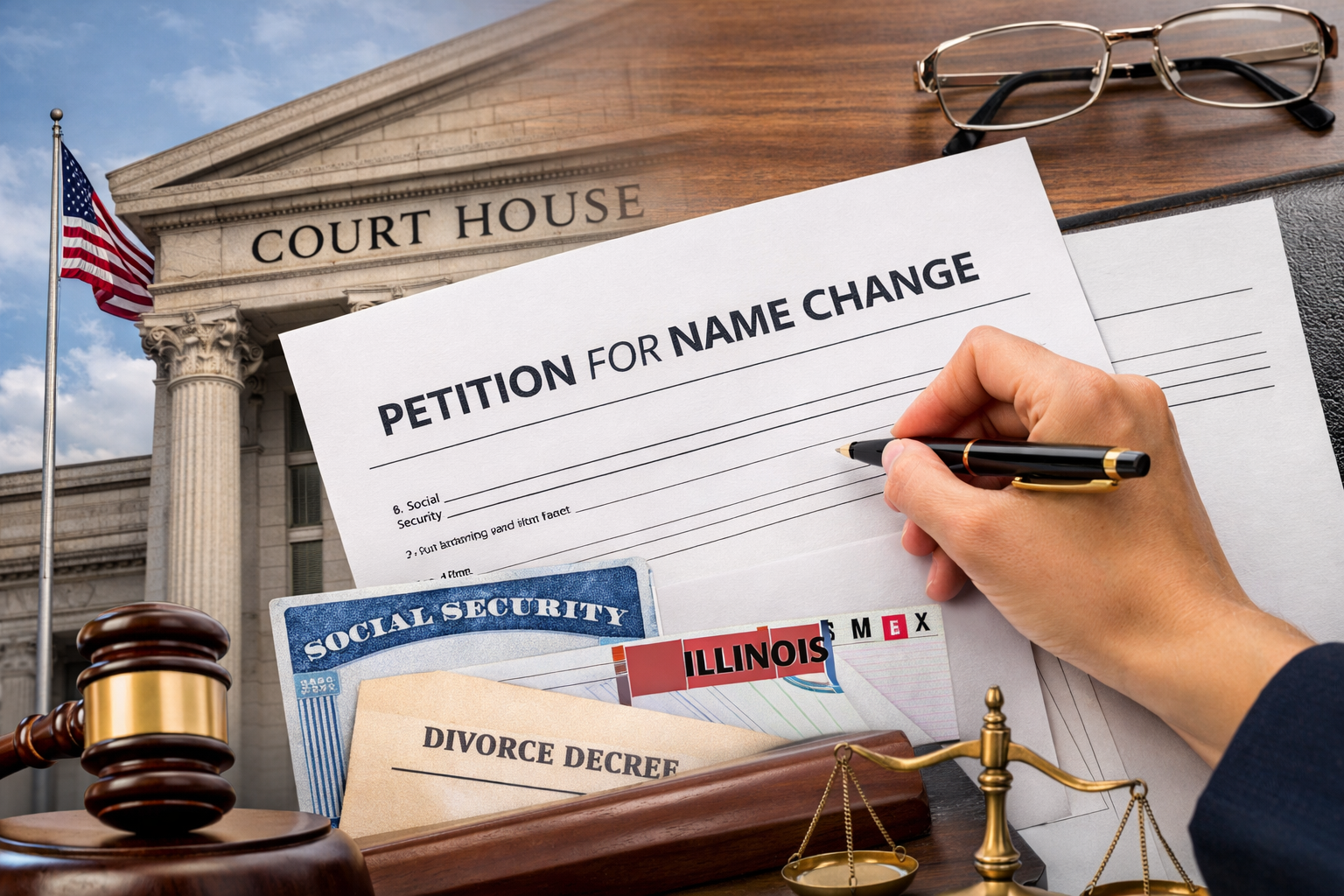
Changing Your Name in Illinois: A Step-by-Step Guide
A step-by-step guide to the various methods to legally change one's name in Illinois
Read More


Changing Your Name in Illinois: A Step-by-Step Guide
Changing your name can mark a major life change — whether it follows a marriage, divorce, or simply a desire for a new beginning. In Illinois, the process is relatively straightforward but includes several important legal requirements. Here’s what you need to know about how to change your name in Illinois and what steps are involved.
Name Change After Divorce
If you want to restore your maiden or previous name as part of a divorce, you can request this directly in your divorce decree. Including the name change in your final judgment avoids filing a separate petition or paying additional fees.
Most Illinois divorce judgments contain a section allowing you to resume a prior legal name. However, this only applies to names you have legally used before. If you wish to adopt an entirely new name, you’ll need to file a separate name change petition.
If your divorce judgment did not include a name change, you can still request one later by filing a motion to amend the decree. In counties like Cook County, a certified copy of your signed judgment can be obtained immediately, allowing you to begin the name restoration process right away.
General Adult Name Change Process in Illinois
If you are not changing your name through a divorce, Illinois law allows you to petition the court for a name change by meeting a few basic criteria:
• You have lived in Illinois for at least six months (735 ILCS 5/21-101);
• You can present a government-issued ID or proof of residency; and
• You have a birth certificate or passport.
Illinois permits U.S. citizens, lawful permanent residents, and undocumented individuals to petition for a name change if they meet the residency requirement. Individuals with felony convictions may also apply, but only if their sentences have been completed, terminated, or pardoned (735 ILCS 5/21-101).
The process begins by filing the necessary paperwork with the Clerk of the Circuit Court in your county, which typically includes:
• A Request for Name Change
• A Notice of Filing
• A Proposed Judgment Order
A hearing is usually scheduled about eight weeks after filing to allow for public notice requirements.
Waiving Public Notice Requirements
In most cases, Illinois requires name change petitions to be published in a local newspaper for three consecutive weeks before the hearing. However, if publishing your name change could expose you to harm, discrimination, or harassment, you may file a Motion to Waive Notice and Publication.
A waiver may be granted if:
1. Publication would cause hardship or pose a safety risk; or
2. You have been granted a protective order such as an Order of Protection or Stalking No Contact Order.
Orders issued in other states also qualify. You do not have to provide proof of hardship to request a waiver (735 ILCS 5/21-103).
If notice is not waived, your name change must be published, and you will need to file the certificate of publication issued by the newspaper with the court before your hearing.
After your name change is approved, update your legal documents promptly — including your Social Security record, driver’s license, and birth certificate. Notify the Illinois Secretary of State within 10 days, and update your bank accounts, insurance, and employment records.
Updating Your Gender Marker
Changing your name and updating your gender marker are separate legal actions, though they can be handled at the same time.
In Illinois, you can choose M, F, or X as your gender marker on identification documents. To make this change, you only need to sign a gender identity affirmation form — no medical documentation is required. This request may be included in your name change petition or filed separately.
Illinois law (735 ILCS 5/21-106) also allows residents born outside the state to request a court finding to update or correct an out-of-state or foreign birth certificate. The petition must include your name, address, the change requested, and the reason for the change.
While Illinois does not require surgery or hormone therapy for gender marker changes, other states or countries may have additional requirements for updating birth records.
Final Thoughts
A name change represents more than a legal formality — it can reflect personal growth, identity, or a new start in life. Understanding the Illinois name change process ensures that your transition is smooth, compliant with state law, and properly recognized across all your important records.
Whether you’re resuming a prior name, adopting a new one, or updating your gender marker, taking the proper legal steps helps make your new identity official and secure.
Do you have an imminent court date? Don't hesitate to contact us.
 Free Legal Consultations





Experienced legal services don't have to be expensive, Serritella Law handles legal matters efficiently and effectively while accomplishing your legal goals.
Whether in person, virtually or over the phone, we tell you how we will effectively handle your legal matter. We ensure you stay informed throughout the process so you know the progress being made.


If you have a new or upcoming emergency court date, we can ensure you are represented.
We offer legal consultations in person, over the phone and virtually in order to serve you better.
Cook County, Will County, DuPage County
Kane County, Boone County, Livingston County, DeKalb County, McHenry, Lake, Grundy & Kendall Counties
.png)

